Vision: Beshte is a chatbot designed to help adolescents practice HIV-aware and HIV-responsible behaviour
Stepping forward:
A team based at the University of Embu in Kenya has piloted and is expanding a chatbot teaching adolescents about sexual and reproductive health, and especially HIV:
- https://beshte.co.ke is online and offers
- private, confidential conversations
- accurate, youth-friendly information
- 24/7 support and resources
- The chatbot is highly scalable, including to other East African countries.
Rationale:
Of 11.6 million young people in Kenya, high numbers suffer HIV infections, human papilloma virus (HPV) infections and other sexually transmitted infections, as well as unplanned pregnancies:
- Adolescents are reluctant to take up HIV counselling/testing, condoms and antiretroviral therapies, despite government encouragement
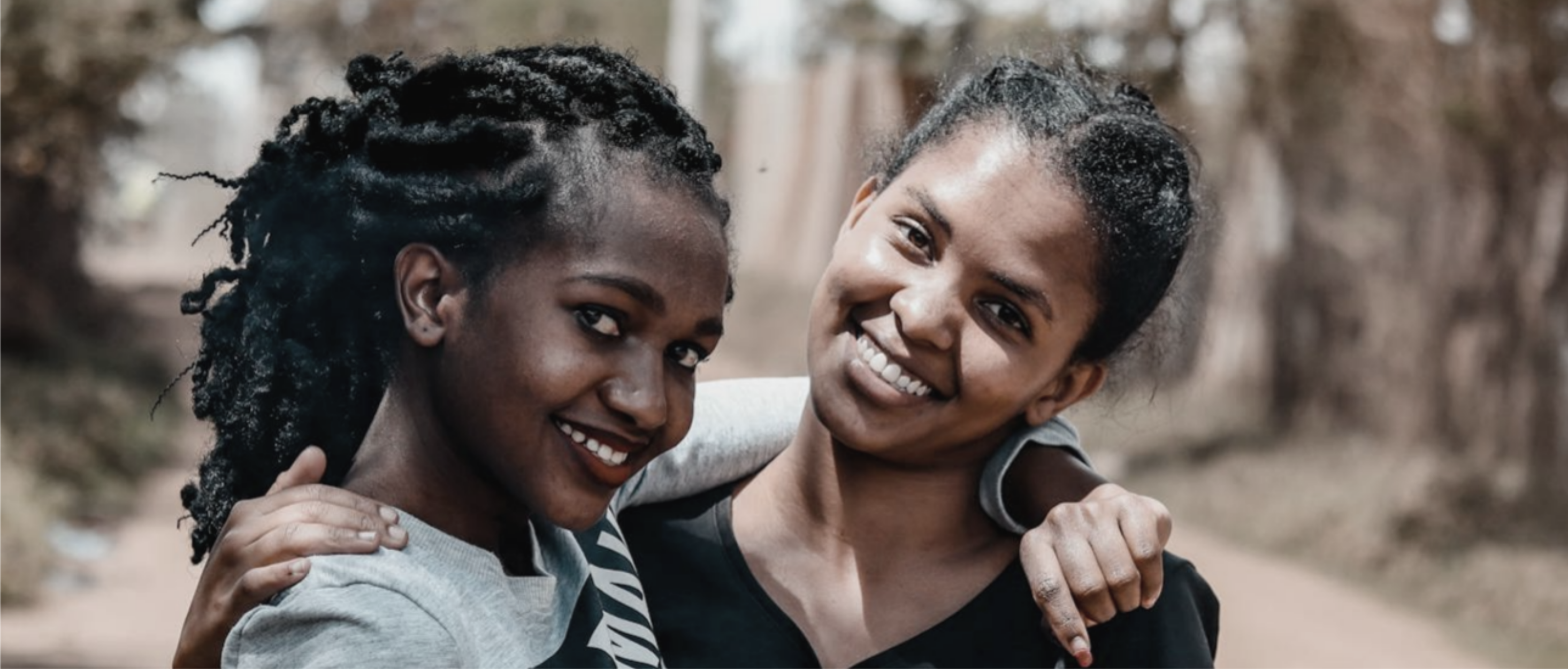
Kinya Stell, 25, is a young professional in public health living in Embu, Kenya. Kinya has somebody she enjoys talking to privately about the personal things that bother her. Somebody named Beshte – slang for a bestie or best friend. The encounter began over a year ago when, as a student leader at Embu University, she was invited to help recruit students to work on an experimental app. The makers wanted to support young people who have, or who want to know about, HIV.
“I was excited because there are some things, especially in our country and community that we don't talk publicly or... go to clinics. Sometimes you fear stigma or for people to hear what you're saying,” Kinya says. Kinya found that Beshte was immediately pleasant to talk to, even in the validation stage.
The app might ask,
“How are you feeling?”
and Kinya could answer,
“I'm not so good.”
The app would reassure her that things would be OK – but with no danger of the dark spiral that can occur with LLMs, since Beshte’s feedback has been vetted by counsellors.
One day, as a joke, Kinya asked what she should do if working with a toxic boss.
“Be calm when approaching them,” Beshte answered. Kinya was delighted.
“I can talk with it, not only about HIV, but about my personal feelings,” she says.
“When talking with Beshte, it's... more of a friend than an automated app, because... a human being will judge me according to my story.”
— Kinya Stells
This approachability was built in from the start, given how vulnerable some of its users are likely to be – especially in the moment of learning they might be HIV positive. To strike the right tone, the developing team avoided using Large Language Models when composing responses. Instead they wrote them, having a counsellor check each one. “We wanted sympathetic responses,” says Dr. Consolata Gakii, a social scientist at Embu University and one of the co-creators of Beshte. “We didn't want the bot saying, 'Sorry, I don't understand.’"
A pressing public health threat
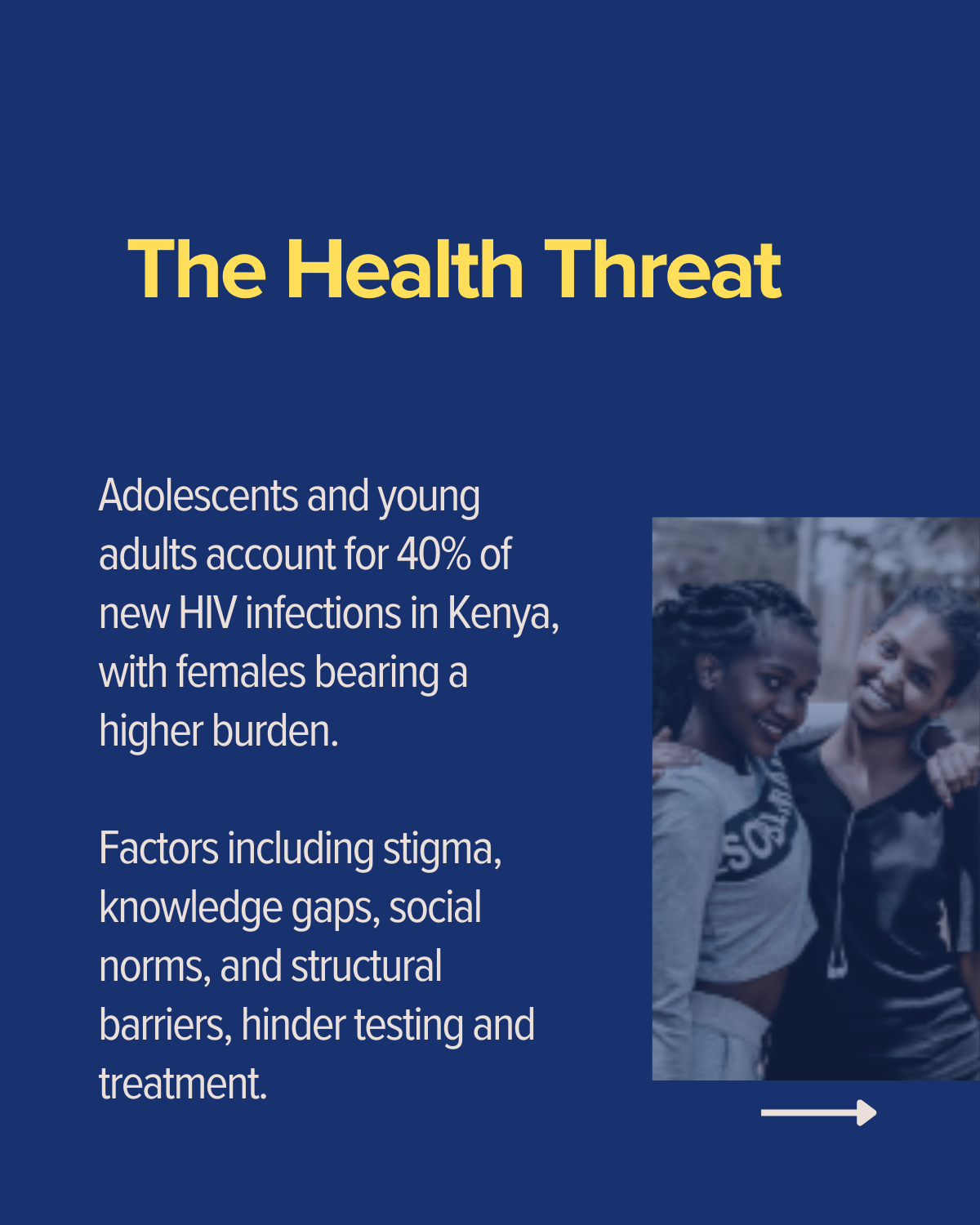
We saw where HIV was leading - and so we decided to do something about it,” says Dr. Victoria Mukami, co-creator of Beshte and an informatics expert. “Traditional interventions are not working," she says. Adolescents and young adults account for 40% of new infections in Kenya, with females bearing a higher burden. Factors that make young people less likely to seek testing and treatment include stigma, knowledge gaps, social norms and structural barriers. Misunderstandings abound – there’s the worry that you can get infected by kissing somebody infected or sharing a bathroom – and so do mystic cures: sex with a virgin, for example. But, as Dr. Mukami points out, it's hard to inform young people today via traditional media, including television ads - it's not where they are. "And this is what you can call the neglected generation," she adds. No specific intervention has been designed for them, and they have what she calls "HIV fatigue" - to the point where some won't even take medication.
“We saw the need to come up with a technological solution, to enable more understanding, more testing, more disclosure, and more awareness.”
— Victoria Mukami
Building a frontline solution
Beshte talks in English, Swahili, and a slang mix of the two named Sheng. It was co-created with the input of psychologists, counsellors, and high school and university students. "The knowledge base was developed by the users, with the users," says Dr. Mukami. Peter Waveru, 22, a Masters student who took part, appreciates the app’s language. “I prompted it with slang, and the model was able to respond. I could mix Swahili and English,” he says. “I found that really appealing.” The chatbot is capable of guiding users directly to medical services, as Peter reports. “I randomly asked it, ‘I engaged in unprotected sex and I'm not sure of my status. How can you help me?’” he says. The app urged him to get an HIV test immediately, and listed local places he could go – one of which, he felt sure, would not be used by anyone he knew. “It would be hard for me to open up... how will my friends take it? The health facility suggested by the app, no one knows me there. So I went and did the test and it came out negative. It was solved without engaging any of my friends,” he says. The chatbot has now been posted online, and its back-end shows that, though designed with particular focus on women, 55% of current users are men. The team has raised funds to further research youth who are in work, rather than in education settings, with an upcoming pilot for 60 users.
“The knowledge base was developed by the users, with the users.”
— Victoria Mukami

Learning and designing with users
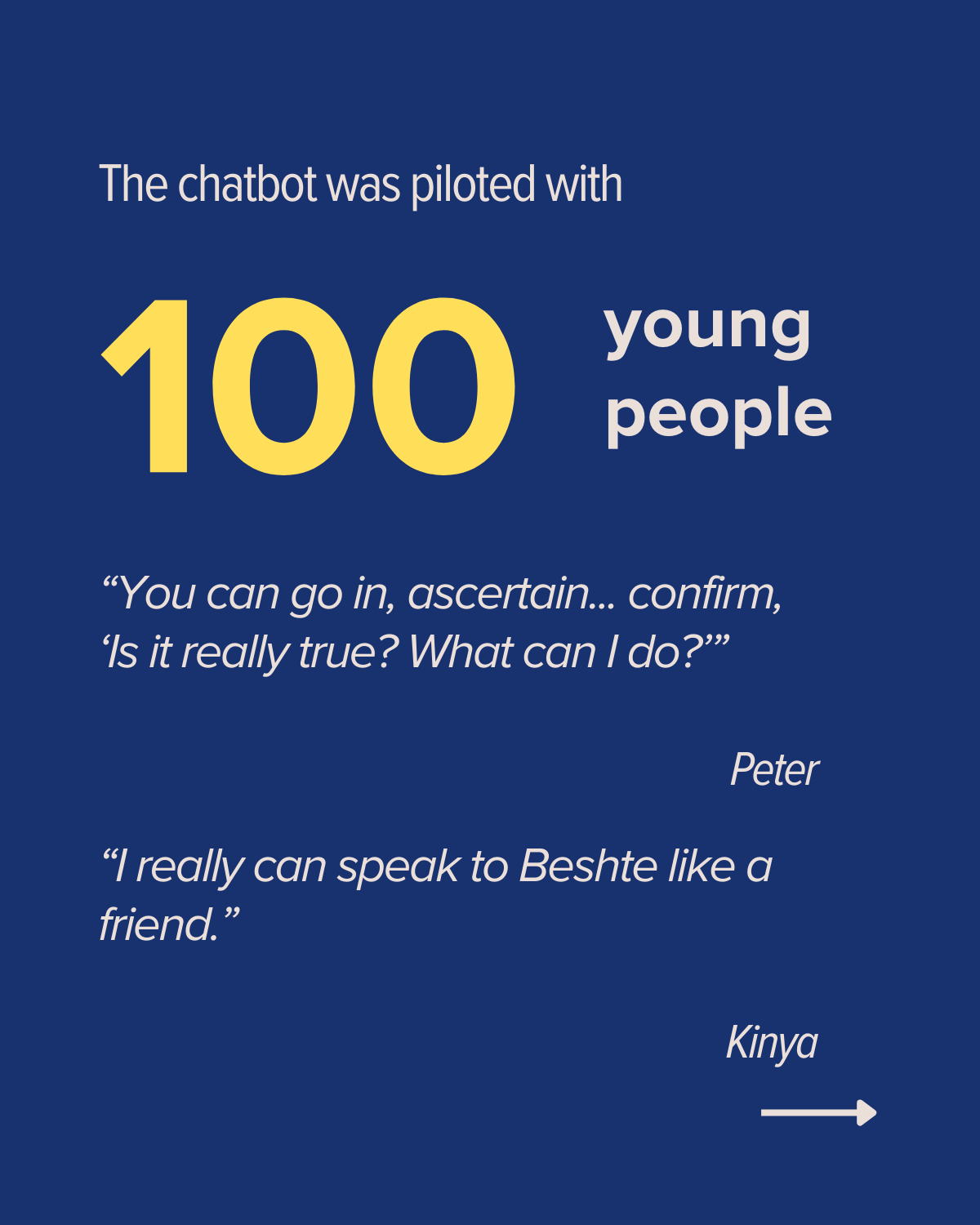
The initial trial, with 100 young people, had its own surprises. Several users contacted the pilot's WhatsApp group to ask if they could share the bot with friends. Another surprise was that users wanted the chatbot to answer all their SRH questions, and not only questions about HIV. The team has consequently broadened the SRH knowledge base.
What next?
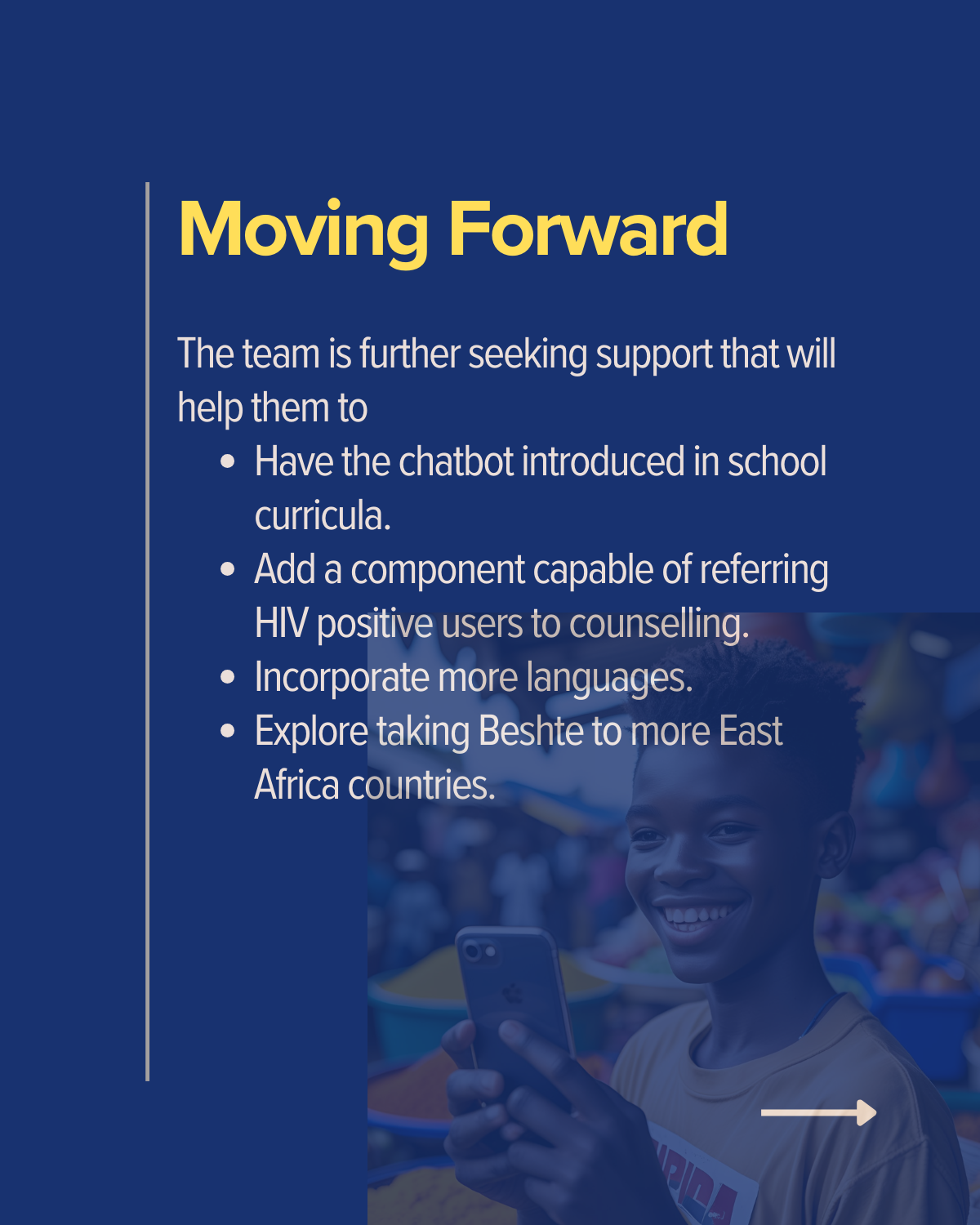
Beshte is ready to scale up: the team has plans to refer HIV positive users to counselling, and to support pregnant adolescents and adolescent mothers - helping them to understand the role of good sexual and reproductive health in avoiding unwanted pregnancies. The team also hopes to take the project to rural and low-literacy settings, with the chatbot introduced by school curricula. Incorporating more languages spoken in Kenya would make it more accessible to people in remote areas. There are other countries in East Africa where the same languages are used, and which have cultural similarities – meaning Beshte could travel much further than Embu County.
“Every community is unique. The question is, always,
are they talking to our local problems?”
— Dr. Consolata Gakii
[insert video player]